Motorsport / testovani
OK
Motorsport
Testing Checks Every Weld and Bolt
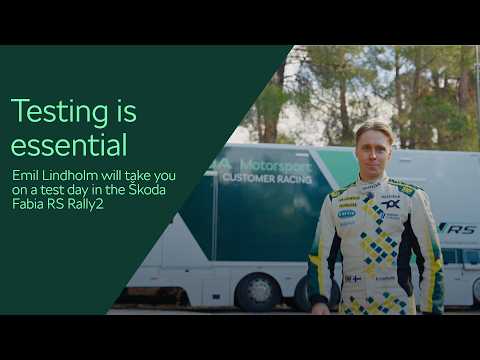
Behind the success of the Fabia RS Rally2 competition car lie its reliability and durability. The Škoda Motorsport team could not achieve either without thorough testing. “We need to check not only the basics, such as the car’s overall durability, its water and dust resistance or the cooling system, but also every small part that could cause a retirement during a real event. We have to be sure of every weld, every rivet and the last little bolt on our car,” says Eric Mommey, chief engineer at Škoda Motorsport.
Testing starts during the development of the car. This phase lasts around a year and a half, and at its end the car’s specification must be ready for homologation by the FIA, the international motoring federation. At this stage, the Fabia RS Rally2 was tested at 14 locations in Europe.
Even after successful homologation, thorough testing of the car does not stop. The tests focus on continuous improvements, which are important for keeping the car competitive. “For example, we once tested new door seals in a really dusty environment in southern Spain. In extreme conditions, we needed to verify that a new material, which was considerably lighter than the previous one, worked properly,” E. Mommey explains.
Teams competing with Škoda cars are also helped by setup tests, which fine-tune the car’s basic settings before key World Championship events on different types of surface. Feedback from the crew matters, as does data from around a hundred sensors on the car. “Over the year we test up to 40 days in various parts of Europe, mostly three- to four-day tests during which we change both the stages and the crews, so that we get the most complete feedback possible,” E. Mommey adds. For the crews, this is a workload comparable to a three-day World Championship rally. Everything happens in quick succession during a test, so credit is also due to the mechanics, who have to adjust the car’s setup as fast as possible.